E-mail to Emily

Home

Composting
Houseplants
Pests of all Kinds
Landscape
Garden
Roses
Christmas
FAQ

Plants of the Week

Wildflowers and Weeds of the Week

Articles
Bookworms
Seed Exchange
Photography

Who's Who in Gardening
What's Growing On

Quotes
Master Gardening
Gardening with Kids

Selected Links

Backyard Wildlife Habitat
Can You Identify This?
Garden Glossary
A Gardener's Garden

Emily (who we are)


emilycompost
Plants

Brassica
Ornamental Cabbages
BRASSICACEAE

This is a family of plants that are native to Europe and Asia and now have been developed as ornamental as well. They are known as cole crops. The ornamental cabbage and kale cultivars are grown specifically for their appearances.

Many of them have frilly, ruffled, edges and bright colors of purple, pinks, and creams.

The ornamental Kales are generally the frilly and the ornamental cabbages are solid and edged.

This plant is perfect for late season interest and color. They only improve with frost and cold weather, getting great, vivid colors below 50°F.

How lovely to look at in the ground, or when used as a chef's garnish. Some are edible but tart and bitter to taste.
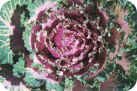
Three series to look for are:

Osaka - this series is very fast growing, has bluish green outer leaves, and is very compact. They will have pink or red centers.

The Peacock series is very showy. The cultivars are hybrids and have feathery fine red or white leaves. Cooler temperatures will produce deeper tones.

The Tokyo series is almost perfectly rounded and neat with blue-green outer leaves, and soft pink, red, or white centers.
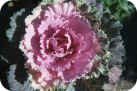
All three series grow to an optimum diameter of 12 inches. Give them plenty of space.

Bolting will occur as the season changes to warmer temperatures and a seed head will develop. It is fun to see them grow into a final castle when the end is near.

Great for composting.

A definite for a winter garden.

Some questions from Emily's mailbox:

Q: I have purchased a purple and green leafed ornamental cabbage and need some tips for caring for it.. do I leave it in the ground during the summer months? Does it like shade or sunny spots, much water?

A: It will do best in sun in the fall through spring. In the hot weather, it will begin to go to seed and then die. I usually let it go to seed and then pull it up for the compost pile.

You can collect the seeds for another season return. Making sure the seeds are mature. I suggest starting them by the end of August for a fall planting.

Q: I was at EPCOT in the Orlando, FL area in February and discovered the beauty of Ornamental Cabbages. I asked one of the workers if he thought it would grow well in South Florida, since South FL is not as cool as Orlando, and, his answers was: "I don't see why not."

Emily, in the winter temperatures sometimes get as high as 85 degrees in South FL., although not for many days at a time. The median temperature I would say is about 78 degrees, quite sunny, and with very little rain at this time of the year (November through February). Bottom line is:

Do you recommend ornamental cabbage for South FL? Or, am I wasting my time and money?

A: I think of ornamental cabbages as needing a fair amount of cold and coolness for them to find their true beauty in color for the winter season.

85 degrees is pretty high for ornamental cabbages......they even spark in color with a light freeze .

High temperatures will make ornamental cabbages 'bolt' which means getting mature very fast and going to seed.

Personally I would I would think twice about growing them in South Florida.

But you could experiment with a pack of four and see how it goes......There are many varieties and some may do better for you than others.

I live in northern Florida ( zone 8b) and I seem to get a few months of ornamental cabbages to perk some color in my beds. But by the end of February mid March even for me they are on their way out.

Q: I have just read your page on ornamental cabbages. I have had three over winter in my garden, and they are now beginning to bolt. As a new gardener, can you tell me if I can take seeds from them, to grow for next year?

A: Yes, you can collect the seeds for another season return. Making sure the seeds are mature. I suggest starting them by the end of August for a fall planting.

 [back to Plants of the Week]

©2000-2006 by Emily Compost, all rights reserved.
Emily's privacy policy